
Urinary Tract Neuromodulation in New York City: Tibial and Sacral Neuromodulation for Urgency, Urge Incontinence, Urinary Retention, and OAB.
If you have any questions, to schedule a consultation, please contact us or call/text: 1-646-663-4151.
We have excellent reviews from patients and their partners. Information for out-of-state and international patients. Find out our office hours or directions to our office.
We offer affordable appointment prices with or without insurance. Same-day virtual video appointments and in-person appointments are available.
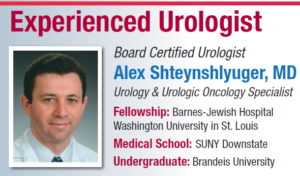
Dr. Shteynshlyuger MD is a board-certified urologist in NYC who specializes in treating urinary problems in men and women. He has performed hundreds of urethral, bladder, and kidney surgeries, including cystoscopy, Interstim sacral neuromodulation, tibial implantable neuromodulation, bladder tumor removal, slings for urinary incontinence, Botox for OAB, artificial urinary sphincter, surgery for enlarged prostate, and many other procedures.
Neuromodulation for Urinary Problems: What You Need to Know

When lifestyle changes, pelvic floor exercises, and medications fail to provide adequate relief or cannot be tolerated, neuromodulation offers an effective treatment option for men and women. This therapy uses targeted, tiny pulses of electrical stimulation to restore normal nerve signaling between the brain, spinal cord, bladder, and pelvic floor.
New! Dr. Alex Shteynshlyuger now offers both the Interstim and the new tibial implantable neuromodulation, Altaviva device, for the treatment of urge urinary incontinence.
What Is Neuromodulation for Urinary Problems?
Neuromodulation refers to the delivery of mild, painless, electrical impulses to specific nerves that control bladder and bowel function. It is FDA-approved for refractory OAB symptoms (including urgency, frequency, and urge incontinence) and non-obstructive urinary retention. Unlike medications that primarily act on the bladder muscle, neuromodulation directly modulates nerve activity to normalize reflexes and communication pathways. It is minimally invasive and has proven efficacy for over 25 years.
- Sacral neuromodulation (SNM or SNS): Targets the sacral nerves (primarily S3) near the tailbone.
- Percutaneous tibial neuromodulation (PTNS or PTNM): Stimulates the tibial nerve in the lower leg (an indirect pathway to the sacral nerves).
- Implantable tibial neuromodulation (iTNM): Uses a small implanted device to deliver ongoing tibial nerve stimulation.
These therapies are typically considered after first- and second-line treatments fail or cannot tolerate medical therapy. Neuromodulation can help patients who have failed Botox injections into the bladder.
How Does Neuromodulation Work?
Neuromodulation achieves its effect by modulating afferent (sensory) nerve signals rather than directly contracting or relaxing bladder muscles. In OAB and urge incontinence, abnormal nerve signaling leads to sudden, uncontrollable bladder contractions and urgency. Neuromodulation interrupts these faulty signals, inhibits overactive reflexes (such as C-fiber activity), and helps restore coordinated communication between the brain, spinal cord, and bladder/pelvic floor.
- Sacral Neuromodulation (SNM): A small, pacemaker-like neurostimulator is implanted under the skin in the upper buttock and connected to a thin lead placed near the S3 sacral nerve root. It delivers continuous or adjustable mild electrical pulses. Patients first undergo a 1–2 week trial with a temporary lead to confirm benefit before permanent implantation (a 40–60 minute outpatient procedure under local anesthesia). The device can be programmed and adjusted noninvasively.
- Percutaneous Tibial Neuromodulation (PTNS): During office visits, a fine needle electrode is inserted near the tibial nerve (just above the ankle). Electrical pulses travel up the leg to influence the sacral nerve plexus indirectly. A typical course involves 12 weekly 30-minute sessions, followed by maintenance treatments (often monthly). No permanent implant is required initially.
- Implantable Tibial Neuromodulation (iTNM): Newer devices (e.g., Altaviva™ implant from Medtronic, eCoin® from Valencia Technologies, a coin-sized leadless battery-powered implant; Revi™ from BlueWind Medical, a wireless miniature implant) are placed near the tibial nerve near the ankle via a quick outpatient procedure under local anesthesia. The device automatically delivers scheduled stimulation sessions (e.g., 30 minutes every few days) without repeated needle insertions or frequent office visits. Some systems are battery-powered (lasting 2–3+ years) or externally powered.
All forms aim to reduce urgency, frequency, and incontinence episodes and improve bladder capacity and control, often leading to meaningful quality-of-life gains.
Effectiveness: Percutaneous Tibial Neuromodulation (PTNS) vs. Sacral Neuromodulation (SNM)
PTNS and SNM are both effective, but head-to-head data and network meta-analyses suggest differences in the magnitude of benefit and practicality.
SNM (Interstim) often demonstrates greater reductions in incontinence episodes and daily voids in comparative analyses. For example, a 2020 systematic review and network meta-analysis of third-line OAB treatments found SNM produced the largest improvements in urinary incontinence episodes and voiding frequency compared with PTNS (and onabotulinumtoxinA).
Responder rates (typically defined as ≥50% improvement in symptoms) for SNM commonly range from 70–85% in long-term studies, with sustained benefits up to 5+ years. PTNS shows good short-term success (often 50–60% in many trials) but generally requires ongoing maintenance sessions and may have slightly lower overall efficacy in direct comparisons.
PTNS advantages include being completely non-implantable during the initial phase, fewer serious side effects, and suitability as a “test” therapy. However, it demands a significant time commitment (weekly office visits). Many patients who respond to PTNS may also respond to SNM, though success with one does not perfectly predict success with the other.
SNM has a longer track record and more robust long-term data, making it a preferred option for patients seeking a “set-it-and-forget-it” solution.
Effectiveness: Implantable Tibial Neuromodulation (iTNM) vs. Sacral Neuromodulation (SNM)
Newer implantable tibial neuromodulation devices bridge the gap between the convenience of percutaneous tibial neuromodulation (PTNS) and the durability of sacral neuromodulation (SNM). A 2025 systematic review and meta-analysis of 20 studies (1,766 patients) found similar overall efficacy and safety between iTNM and SNM: urge urinary incontinence responder rates of greater than 70% for both treatment modalities (response is defined as ≥50% reduction in urgency incontinence episodes): 71.3% for iTNM vs. 71.8% for SNM.
- OAB responder rates: 79.4% for iTNM vs. 73.9% for SNM.
- Reduction in UUI episodes per day: Approximately 3.0 for iTNM and 3.5 for SNM.
- Quality-of-life improvements: Clinically significant and comparable (OAB-q HRQoL score increases of ~34–35 points). Patient satisfaction was high (up to 95% in iTNM studies).
Safety profiles are also comparable, with iTNM slightly favored, with lower rates of device-related adverse events (9.6% vs. 12.7%) and serious adverse events (0.3% vs. 3.3%). iTNM showed notably lower rates of surgical revisions, explants, and lead migrations. iTNM procedures are generally less invasive (smaller ankle incision, no sacral lead) and do not always require a pre-implant trial.
Results from pivotal randomized controlled trials (e.g., Altavita, eCoin, and Revi) show sustained 68–79% response rates with high patient satisfaction and minimal explant rates (2–4%).
Both SNM and iTNM are generally safe with low complication rates (infection, pain at the implant site, or unwanted stimulation are the most common). SNM carries a small risk of lead migration or need for revision (5–27% in studies). iTNM and PTNS have fewer re-intervention needs. All options are reversible. Candidacy depends on individual anatomy, preferences for invasiveness, and ability to commit to office visits (for PTNS). Neither is suitable for patients with certain obstructions or pacemakers in some cases—consult a specialist
Does Insurance Cover Neuromodulation for Urinary Problems?
Sacral and tibial nerve neuromodulation are effective treatment options that have been proven to work in high-quality randomized controlled trials. They are FDA-approved. Health plans are expected to cover the treatment with sacral neuromodulation as well as tibial neuromodulation as long as plan-specific medical necessity criteria are met. New York Urology Specialists will work with your health plan to obtain coverage, and if necessary, will file an appeal if the treatment is denied.
Typically, insurance coverage requires a comprehensive evaluation (physical exam, labs, pelvic ultrasound, cystoscopy, and possibly urodynamic testing). In addition, adequate trial of behavioral therapy and oral medications is required by many health plans.

If you have any questions, to schedule a consultation, please contact us or call/text: 1-646-663-4151.
We have excellent reviews from patients and their partners. Information for out-of-state and international patients. Find out our office hours or directions to our office.
We offer affordable appointment prices with or without insurance. Same-day virtual video appointments and in-person appointments are available.
Did you know? Dr. Shteynshlyuger has performed over 1,000 bladder, kidney, penile, and prostate surgeries, including Interstim sacral neuromodulation, bladder tumor removal, slings for urinary incontinence, Botox for OAB, artificial urinary sphincter, Urolift, and prostate enucleation. He performs 150-200 surgeries a year.
Where to Get Treatment for Urge Urinary Incontinence with Interstim or Altaviva Tibial Neuromodulation in NYC?
At New York Urology Specialists, we offer same-day treatment of urinary problems for men and women. We offer the Interstim sacral neuromodulation as well as in-office Altaviva implantable tibial neuromodulation. Same-day virtual video appointments and in-person appointments are available.
Call/text today: 1-646-663-4151 or make an appointment online.
We perform Interstim sacral neuromodulation, bladder tumor removal, slings for urinary incontinence, Botox for OAB, and artificial urinary sphincter. We offer treatment for bladder stones, urinary retention, frequent urination, kidney stones, urinary incontinence, painful urination, prostatitis, frequent UTI, and pelvic pain. We offer confidential appointments.
Our appointment costs are affordable with or without insurance. We offer free insurance verification.
We perform cystoscopy, pelvic sonogram, and bladder ultrasound in our office. We offer Botox for bladder control, the Urolift procedure, and the Rezum water-vapor procedure in our office. We treat urinary and erectile problems. We offer confidential appointments.
Read Real Stories of Men and Women who Underwent Treatment for Urinary Problems at New York Urology Specialists.
Read RealStories: Frequent UTI and bladder pain in a 43-year-old woman.
Read RealStories: Frequent urination and slow urine stream in a 49-year-old man.
Read RealStories: Pain with urination and after ejaculation for 1 year in a 36-year-old man.
Read RealStories: 32-year-old woman with a constant need to urinate and urinary leakage.
Cost of Bladder Control Treatment without Insurance
At New York Urology Specialists, we offer affordable treatment. Our prices are low for patients without insurance and for those who have high insurance copays, high deductibles, or insurance plans that do not cover treatment costs.
At New York Urology Specialists, we offer flat-fee, ‘all-costs-included’ procedures such as cystoscopy, bladder biopsy, urodynamic studies, bladder ultrasound, Botox for bladder problems, and many more. The procedures are performed in our office under local anesthesia or sedation. Men and women from other states can save thousands of dollars over local hospital fees by coming to New York Urology Specialists for treatment. Please contact us for current prices and discounts for patients without insurance or with high insurance deductibles.
Cost of Treatment and Insurance
 At New York Urology Specialists, we offer affordable treatment for men and women. Our prices are low for patients without insurance and for those who have high insurance copays, high deductibles, or insurance plans that do not cover treatment costs.
We accept many health insurance plans. We would be happy to verify your eligibility and benefits and provide you with detailed information on your health plan’s coverage. Financing options and credit options are available to help you pay for medical care.
Why Choose New York Urology Specialists for Incontinence and Urinary Problems?
- All treatment is performed by a board-certified urologist experienced in treating men and women with symptoms of frequent urination, urge to pee, urinary incontinence, UTI, and other urinary problems using medical therapy, minimally invasive therapies, lasers, and surgery.
- We are one of the few practices in the region to offer a full range of options for treating urinary problems, erection problems in men, and sexual problems in women.
- We offer treatment options for frequent urination, overactive bladder, bladder pain, incomplete bladder emptying, urinary retention, pelvic pain, and prostatitis in our office. Office procedures avoid the risks, costs, and recovery from general anesthesia.
- We offer diagnostic testing in our office, which avoids hospital costs.
- Extensive experience: Thousands of men and women have been treated successfully with Botox injections for frequent urination, eCoin tibial nerve neuromodulation, Interstim sacral neuromodulation, bladder stone removal, kidney stone lithotripsy, Axonics sacral nerve modulation, NURO tibial nerve modulation, urethral sling, and artificial urinary sphincter.
- Confidential and Understanding Care. We understand that most of our patients desire privacy. We see patients with a variety of urological problems. Your reason for visiting us is entirely confidential.
- We are conveniently located within a 30-60 minute commute to men and women seeking treatment for bladder control problems, enlarged prostate, bladder cancer, urinary incontinence, and cancer treatment in Manhattan, Brooklyn, Queens, Staten Island, Westchester, Long Island, Bronx, and New Jersey.
What do Urinary Problems Look Like?
You can find pictures of urinary problems and before-and-after treatment images in our image gallery.
Scheduling Appointments for Urinary Problem Treatment at New York Urology Specialists
If you have any questions, to schedule a consultation, please contact us or call/text: 1-646-663-4151.
We have excellent reviews from patients and their partners. Information for out-of-state and international patients. Find out our office hours or directions to our office.
We offer affordable appointment prices with or without insurance. Same-day virtual video appointments and in-person appointments are available.
Dr. Shteynshlyuger MD is a board-certified urologist in NYC specializing in treating urinary problems in men and women. He has performed hundreds of urethral, bladder, and kidney surgeries, including cystoscopy, Interstim sacral neuromodulation, bladder tumor removal, slings for urinary incontinence, Botox for OAB, artificial urinary sphincter, surgery for enlarged prostate, and many other procedures.
Urinary Problem Treatment for Men and Women With Fast Recovery at New York Urology Specialists
 At New York Urology Specialists, our urologists are specially trained in evaluating and treating bladder and prostate problems in men and women’s health concerns, including sexual problems and urinary problems. We understand the challenges that urinary and sexual problems create for our patients, their relationships, and their self-esteem. We help you find a treatment for bladder control problems that fit your needs, lifestyle, and preferences.
Urologists are doctors specializing in treating men and women with urinary problems and sexual problems, including bladder leakage problems, urge to pee, incomplete bladder emptying, and frequent urination. By virtue of our experience and skill, we can offer an effective treatment option for nearly every man and woman who desires an effective treatment for any problem that affects the urinary tract. We offer medical and surgical treatment for urinary and sexual problems.
We Treat Some of the Most Complex Urinary Problems Including:
- Enlarged prostate
- Prostate Cancer
- Burning during urination
- Frequent urination
- Urinary retention
- Chronic Prostatitis
- Pelvic Pain
- Bladder Pain
- Frequent Urination
- Pelvic pain
|
 Schedule an Appointment with Dr. Shteynshlyuger:
If you have any questions, to schedule a consultation, please contact us or call/text: 1-646-663-4151.
We have excellent reviews from patients and their partners. Information for out-of-state and international patients. Find out our office hours or directions to our office.
We offer affordable appointment prices with or without insurance. Same-day virtual video appointments and in-person appointments are available.